Sunday Roast Elements: Energy and Nutrient Content
Detailed analysis of traditional roast meal components.
Detailed analysis of traditional roast meal components.
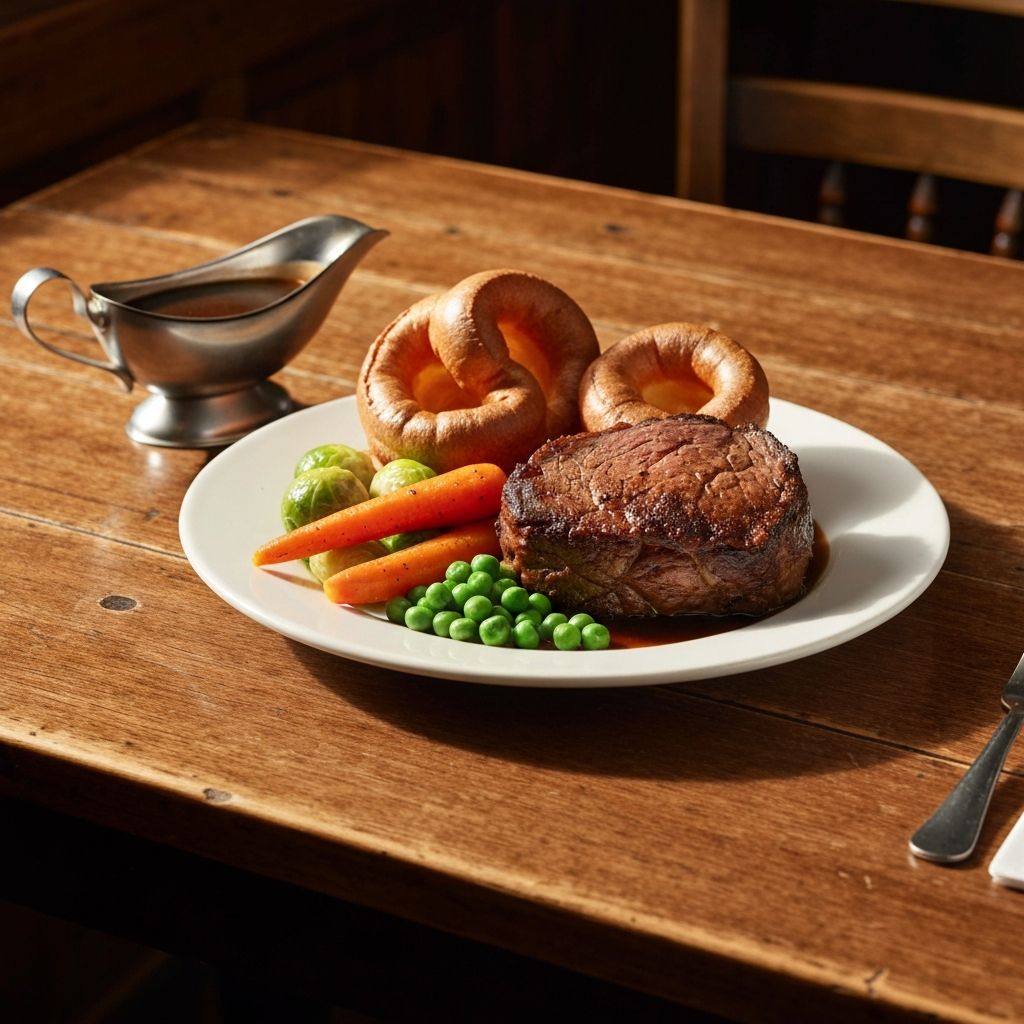
The Sunday roast represents the foundation of British culinary tradition, particularly when served within pub environments. This meal comprises multiple distinct components, each contributing specific nutritional characteristics to the overall composition. Analysis of individual elements provides context for understanding the complete nutritional profile.
Roast beef forms the central protein component of many Sunday roasts. Preparation methods and cuts employed significantly influence fat and mineral content.
| Beef Cut | Per 100g (kcal) | Fat (g) | Protein (g) | Iron (mg) |
|---|---|---|---|---|
| Lean roast beef (trimmed) | 155 | 5 | 27 | 2.6 |
| Roast beef (medium fat) | 180 | 10 | 26 | 2.8 |
| Roast beef with fat marbling | 220 | 16 | 25 | 2.5 |
Pork roasts demonstrate variable fat content depending on cut and fat retention during preparation.
| Pork Cut | Per 100g (kcal) | Fat (g) | Protein (g) | Thiamine (mg) |
|---|---|---|---|---|
| Lean pork roast | 130 | 3.5 | 28 | 0.6 |
| Pork roast (moderate fat) | 160 | 9 | 26 | 0.8 |
Lamb roasts tend toward higher fat content than beef or pork, with saturated fat comprising a significant proportion.
| Lamb Cut | Per 100g (kcal) | Fat (g) | Saturated Fat (g) | Protein (g) |
|---|---|---|---|---|
| Lean lamb roast | 155 | 6 | 2.5 | 27 |
| Lamb roast (typical pub) | 190 | 12 | 5.2 | 25 |
Yorkshire puddings represent a traditional component prepared from a simple batter of flour, eggs, and milk, baked in hot fat.
| Component | Per 100g (kcal) | Per Typical Pudding (kcal) | Fat (g) | Carbohydrates (g) |
|---|---|---|---|---|
| Yorkshire Pudding (baked in beef dripping) | 200 | 150-200 | 11.5 | 18 |
The energy density of Yorkshire pudding derives substantially from the fat component—both inherent to the batter (eggs and milk fat) and absorbed during baking in hot dripping.
The vegetable components of Sunday roasts vary considerably but typically include root vegetables roasted in oil or meat dripping.
| Vegetable (roasted in oil) | Per 100g (kcal) | Per Serving (kcal) | Fibre (g) | Carbohydrates (g) |
|---|---|---|---|---|
| Carrots (roasted) | 90 | 130 | 2.4 | 15 |
| Parsnips (roasted) | 150 | 200 | 4.8 | 22 |
| Potatoes (roasted, not chips) | 150 | 180 | 1.8 | 20 |
| Broccoli (steamed or roasted) | 35 | 52 | 2.2 | 7 |
Gravy preparation varies between establishments but typically involves meat stock, flour as a thickening agent, and rendered fat.
| Gravy Type | Per 100ml (kcal) | Per Ladle (kcal) | Fat (g) | Sodium (mg) |
|---|---|---|---|---|
| Beef gravy (flour thickened) | 25 | 50-80 | 1.2 | 380 |
A typical pub Sunday roast serving combines the following elements:
| Component | Portion (g) | Calories | Fat (g) | Protein (g) |
|---|---|---|---|---|
| Roast beef (medium) | 125 | 225 | 12.5 | 33 |
| Yorkshire pudding (2) | 80 | 160 | 9.2 | 4.8 |
| Roasted vegetables (mixed) | 180 | 190 | 7.2 | 4.5 |
| Roast potatoes | 150 | 225 | 10.5 | 3 |
| Gravy (2 ladles) | 150 | 75 | 1.8 | 2 |
| Total Meal | 685 | 875 | 41.2 | 47.3 |
The complete Sunday roast demonstrates energy density of approximately 1.3 kcal/g, placing it within the moderate energy density range. This reflects the inclusion of vegetables and gravy-based components which reduce overall energy density compared to purely protein and fat-based preparations.
Sunday roasts provide substantial micronutrient contribution:
However, sodium content typically ranges from 1200-1600mg per complete serving, representing significant proportion of recommended daily intake.
Nutritional profiles vary based on:
This information serves an educational purpose regarding the nutritional composition of traditional British pub meals.
View related traditional food data