Fish & Chips: Energy Density and Macronutrient Profile
Comprehensive analysis of Britain's most iconic pub dish.
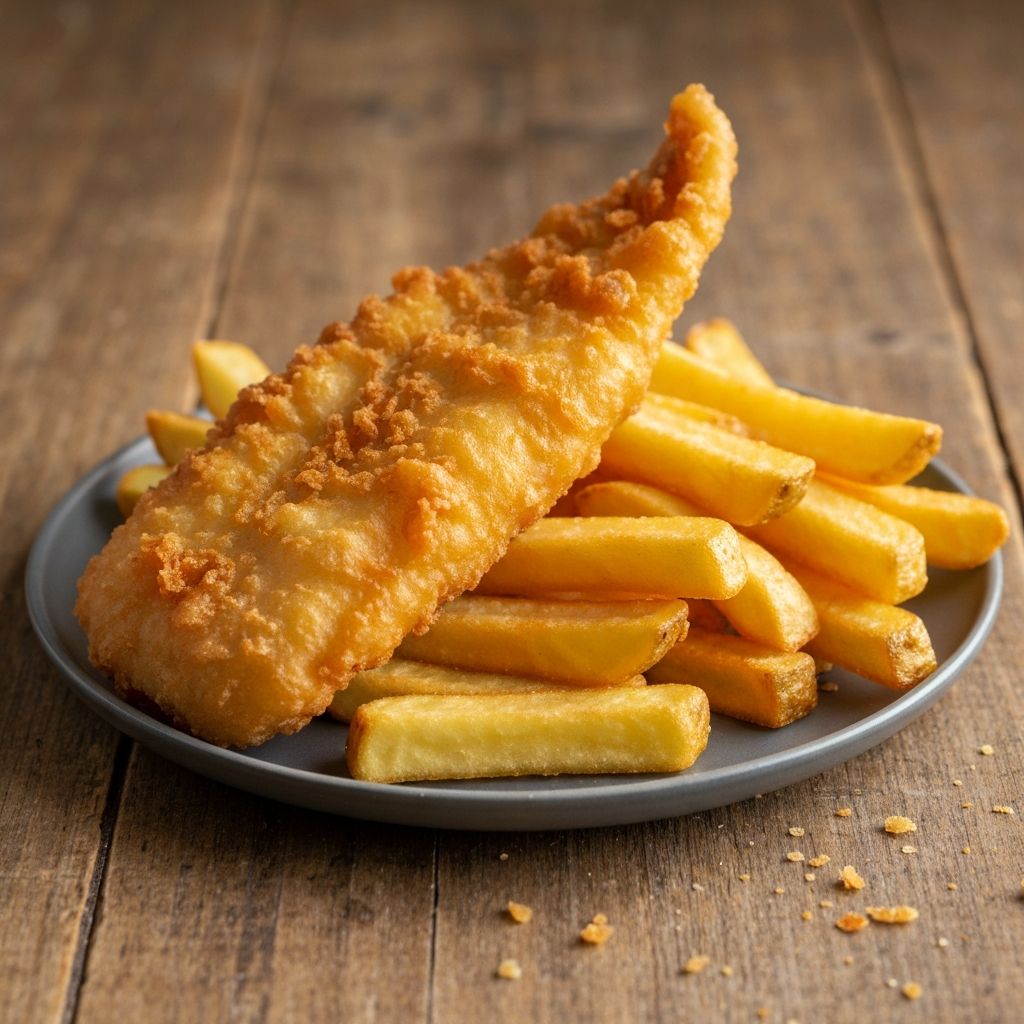
Comprehensive analysis of Britain's most iconic pub dish.
Fish and chips represents one of the most widely consumed pub meals across the United Kingdom. The dish typically consists of battered fish—traditionally cod or haddock—deep-fried in vegetable oil, accompanied by thick-cut chips and mushy peas. Understanding the nutritional composition of this preparation provides insight into why this dish exhibits significant energy density.
The fish itself contains substantial protein and beneficial micronutrients. However, the thick batter coating dramatically increases the energy density of the overall preparation. Batter comprises wheat flour, water, and often includes raising agents. When submerged in oil at high temperature, the batter absorbs considerable quantities of fat.
Unseasoned baked fish (100g): approximately 82 kcal
Battered and deep-fried fish (100g): approximately 220 kcal
This represents a near tripling of energy density solely due to the preparation method and batter absorption of dietary fat.
Chips form the substantial portion of this dish by weight. The preparation involves cutting potatoes into strips and deep frying them in oil. Unlike baked potatoes, which contain minimal fat, deep-fried chips absorb oil during cooking.
| Preparation Method | Per 100g (kcal) | Fat (g) | Carbohydrates (g) |
|---|---|---|---|
| Boiled Potato | 77 | 0.1 | 17 |
| Oven-Baked Chips | 150 | 3.5 | 28 |
| Deep-Fried Chips (pub style) | 265 | 15 | 30 |
A standard pub serving of fish and chips typically comprises:
| Component | Portion (g) | Calories | Protein (g) | Fat (g) |
|---|---|---|---|---|
| Battered Fish | 165 | 363 | 25 | 19 |
| Chips | 225 | 596 | 5.4 | 34 |
| Mushy Peas | 100 | 100 | 8 | 0.5 |
| Total Meal | 490 | 1059 | 38.4 | 53.5 |
The macronutrient profile of fish and chips reflects the preparation methods employed:
Protein: Approximately 15% of total calories
Derived primarily from the fish component, providing approximately 38-40g per typical serving.
Fat: Approximately 45% of total calories
The substantial fat content reflects both the inherent lipid composition of fish and the oil absorbed during deep frying of both the battered fish and chips.
Carbohydrates: Approximately 40% of total calories
Primarily from chips and batter, representing approximately 110-120g per serving.
Particular attention warrants the saturated fat composition. Deep-frying in vegetable oils contributes to saturated fat intake, with typical pub portions containing approximately 15-18g of saturated fat—representing 75-90% of the recommended daily intake for many individuals.
Salt (sodium chloride) constitutes a significant component of pub preparation, both incorporated into batters and applied as seasoning post-cooking. A typical serving contains approximately 1200-1500mg sodium, representing 50-65% of recommended daily intake.
The fish component provides valuable micronutrients including omega-3 fatty acids, selenium, and vitamin D. However, the abundance of added fat and salt substantially modifies the nutritional context of these micronutrients.
On a per-weight basis, fish and chips demonstrates energy density of approximately 2.1 kcal per gram. This places it within the high energy density category, comparable to many processed foods and considerably higher than whole vegetables, legumes, or unfried preparations.
| Food Category | Energy Density (kcal/g) |
|---|---|
| Vegetables (raw) | 0.2-0.5 |
| Fruit (fresh) | 0.4-0.8 |
| Grains (cooked) | 1.0-1.3 |
| Fish & Chips (fried) | 2.1 |
| Nuts and oils | 5.5-9.0 |
Fish and chips emerged as a popular working-class meal in 19th-century Britain, with deep frying providing a rapid cooking method suitable for commercial preparation. The combination of cheap white fish and potatoes offered caloric density suitable for physically demanding labour. This historical context persists in contemporary pub culture, where the dish maintains prominent status despite shifts in general activity patterns and nutritional understanding.
Nutritional composition varies significantly between establishments based on:
This information serves an educational purpose regarding the nutritional composition of traditional British pub meals.
View related traditional food data